NEW: AutoMynd Unveils Patient-Centered AI EMR, Automating Episodes From Referral to Reimbursement Read more →
.svg)
.svg)

A busy clinical director sits at her desk on a Tuesday morning, watching an absolute mountain of faxed paperwork pile up from local hospitals. Each packet represents a patient waiting to transition out of a hospital bed, but they are buried under dozens of unread pages of history, messy vitals, and confusing medication sheets. In a fast-paced market, the agency that reviews and accepts a patient first gets the contract. Yet, human intake teams spend hours just trying to read, sort, and process a fraction of these files. Transitioning away from slow workflows to modern home health referral management software can completely flip the script, letting technology handle the initial deep read before a human ever touches the keyboard.
The secret lies in moving past old software that treats digital files like flat pictures. This blog breaks down exactly how an intelligent platform reads incoming documents instantly, extracts critical medical facts, and slashes the time it takes to get care staff out to a patient's house.

Every single day, valuable patient transfers stall because of data bottlenecks. When hospital case manager hits send on a file, it sits in a digital queue waiting for a coordinator to look at it. The staff member has to read through dense notes, try to find the actual physician orders, and verify complex insurance criteria.
If an agency takes four hours to get back to a hospital with an approval, that case manager has usually already moved on to another provider. This delay hurts referral relationships and cuts directly into an agency's growth. Manual sorting is a slow, error-prone race that human teams are naturally losing to volume.
An intelligent system does not just look at characters on a page like a basic office scanner. It relies on advanced processing models that actually understand medical terms, abbreviations, and the chaotic structure of clinical documentation. The moment a multi-page packet arrives, the platform scans the text and organizes the chaos.
The software looks for specific operational pillars to build an instant patient summary:
• Urgency Indicators: High-risk words such as recent falls, unstable vitals or complex wounds are automatically flagged in the system and appear at the top of the coordinator's screen.
• Medication Discrepancies: It matches lists of old medications to new hospital discharge orders, alerting a field nurse, before he or she schedules a visit, to any discrepancies.
• Eligibility Matching: The platform verifies if the patient's unique diagnoses are in compliance with the regulatory requirements and insurance parameters, minimizing the risk of uncompensated care.
• Automatic Chart Creation: It securely extracts the name, address, and medical background, instantly populating a brand-new electronic profile without manual typing.
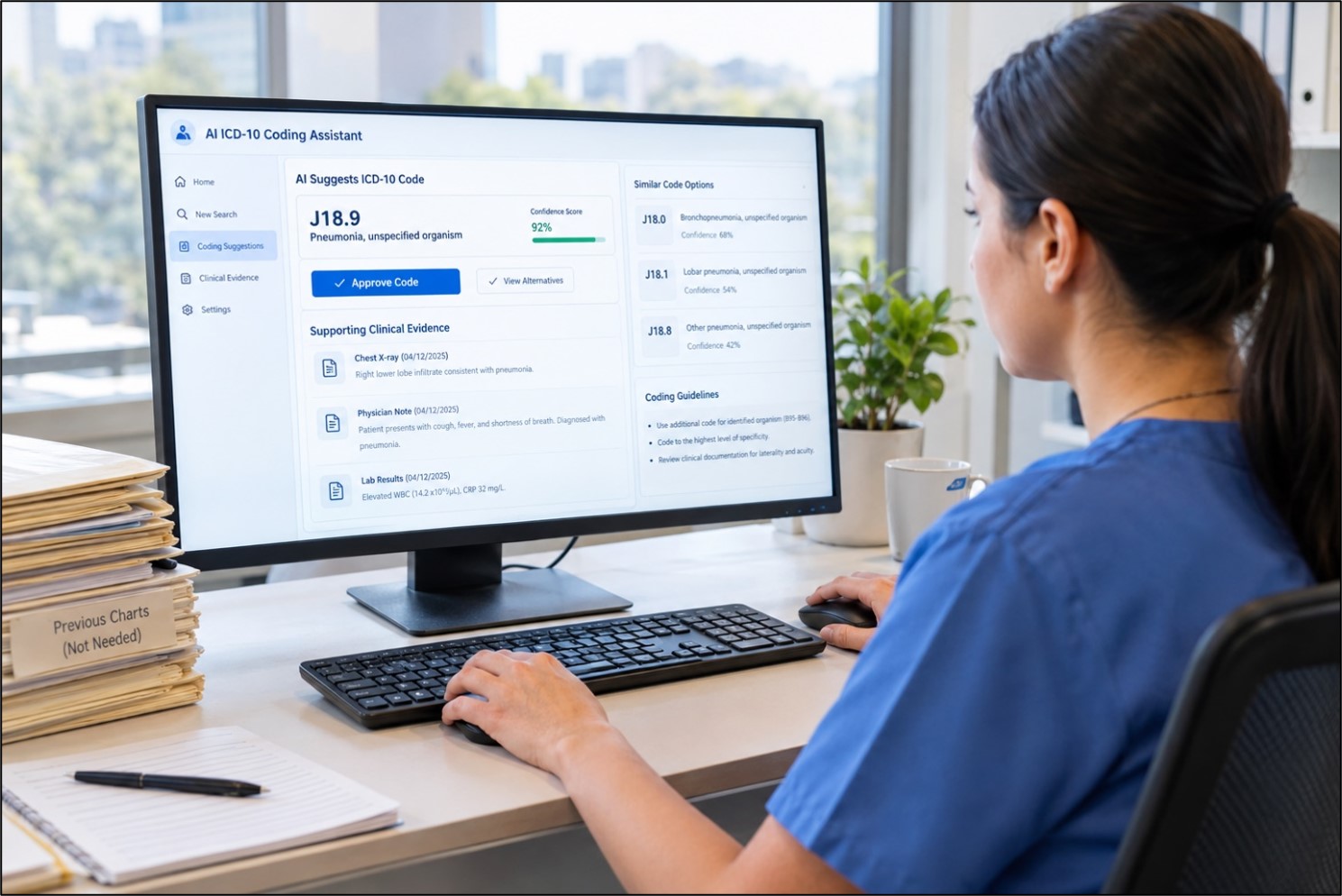
The true magic happens when your team logs into work. Instead of opening a blank screen and facing hours of typing out demographic details, they find a clean dashboard with pre-analyzed profiles waiting for review. The system has done ninety percent of the background labor.
The intake coordinator only has to check to ensure that the pre-filled fields in the text box are in sync with the snippets of the original document. The afternoon job and the half-hour time chunk it used to take now take less than 10 minutes. This allows your brightest administrative minds to spend their time coordinating schedules and talking to hospital partners instead of doing tedious data entry.
Fixing the initial document review stage changes how your entire business scales. When you can safely review and accept a patient in minutes instead of hours, hospital case managers notice. Your agency quickly becomes their preferred choice because you solve their discharge delays.
Furthermore, clean data entering the system means fewer headaches down the road. Field clinicians get highly accurate information before their initial visits, billing teams encounter far fewer transcription errors, and compliance audits go smoothly. Speed at the front door protects your entire operation.
Relying on highlighters, physical paper piles, and manual typing to process incoming patients is a massive risk in a competitive market. Outdated platforms leave your office staff exhausted and your growth numbers stalled. True operational success requires a system built from scratch to handle heavy documentation volumes with total accuracy. AutoMynd offers an incredibly smart platform designed specifically to automate the heavy lifting of clinical data processing, helping your agency read, review, and accept incoming cases instantly while keeping your focus on delivering excellent patient care.
Automating this phase allows agencies to process incoming documentation in a fraction of the traditional time. It drastically reduces manual data entry errors, lowers staff burnout, and increases overall census numbers by allowing coordinators to accept patients much faster.
Yes, modern platforms are specially trained on vast amounts of real-world clinical documentation. They can read through messy handwriting, smudged faxes, and complex abbreviations by analyzing the surrounding context of the phrases to ensure accurate data extraction.
Hospitals operate under heavy pressure to discharge patients safely and quickly to free up beds. When an agency can review documents and confirm an acceptance within minutes, it completely solves a major hospital bottleneck, making that agency a highly preferred partner.
Data security is built directly into the core architecture of these advanced platforms. The software utilizes high-level encryption standards and fully complies with federal medical privacy laws, ensuring all patient documentation is parsed, processed, and stored with total security.
.svg)


.png)