NEW: AutoMynd Unveils Patient-Centered AI EMR, Automating Episodes From Referral to Reimbursement Read more →
.svg)
.svg)
.png)
In most home health organizations, “AI medical billing” shows up as another tool pointing at the denial work queue.
The queue grows. Days in A/R creep up. Your billing and coding teams keep working on the same classes of denials. And leadership is still asking the same questions about DSO, reserves, and write‑offs.
The problem isn’t that you’re missing another denial widget.
The problem is that your revenue cycle is built as a system of record, not a system of action.
AI medical billing only becomes strategic when it’s treated as a control system for cash flow—a predictive layer that shapes what gets billed, when, and with what level of risk.
Most agencies have robust systems of record:
· The EMR as the clinical and operational source of truth
· The clearinghouse and payer portals as the record of what was billed and paid
· Spreadsheets and BI tools summarizing KPIs like DSO and denial rate
The system of action is different. It doesn’t just store and report. It:
· Continuously reads data from charts, claims, and remits
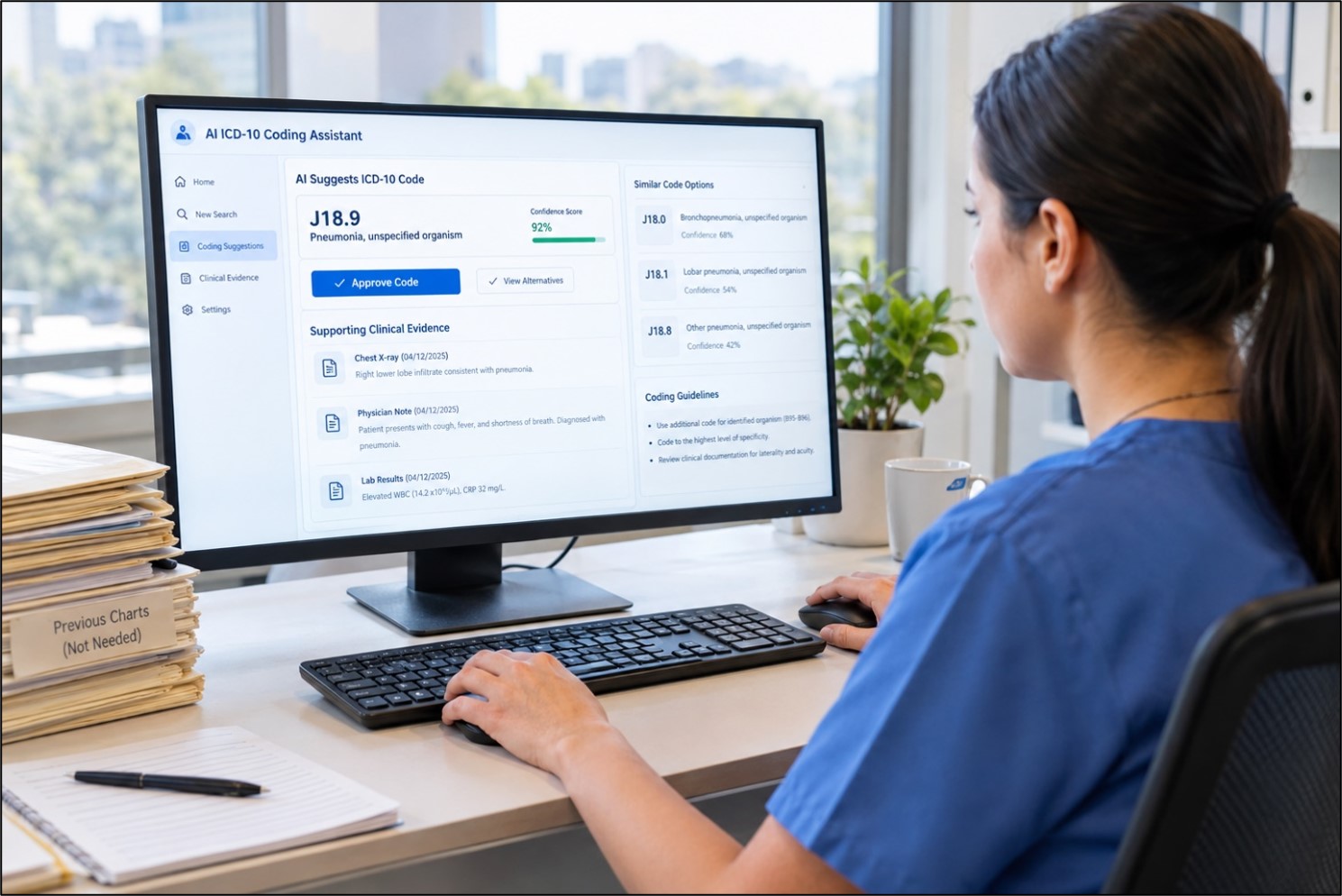
· Uses AI medical coding and AI medical billing models to detect risk and opportunity
· Routes specific tasks to clinicians, coders, QA, and billers
· Learns from outcomes and adjusts its recommendations over time
In a modern home health billing stack, the system of action lives between the EMR and the clearinghouse:
EMR (system of record) → AI chart + billing “brain” (system of action) → billing →clearinghouse → payer
This is where offerings like AutoMynd’s QAgent fit: as an AI chart review and coding QA layer that actively orchestrates what enters the billing stream, not just what gets reported later.
Forget the buzzwords. For home health, a real AI billing layer has three core jobs:
Instead of only looking at claim fields, the AI engine reads the entire chart:
· OASIS‑E assessments
· SN, PT, OT, ST visit notes
· Wound documentation and functional scores
· Medication lists and diagnoses
· Orders, F2F, and plan of care details
From there, it:
· Identifies documentation patterns that put PDGM reimbursement or MA payment at risk
· Suggests a diagnosis structure that supports medical necessity and PDGM grouping
· Flags LUPA risk, comorbidity opportunities, and missing links between OASIS, codes, and narrative
This is where a product like QAgent operates as a system of action: it doesn’t just surface suggested codes; it evaluates the chart in context and feeds back targeted changes that materially affect home health billing outcomes.
A system of action for AI medical billing treats every pending claim like a small forecasting problem:
· What is the probability this claim will be denied, and for what reason?
· How many days is this payer likely to take to pay if the claim is clean?
· How do documentation gaps and coding patterns change that probability?
The AI uses historical claims, remits, and payer‑specific behavior to assign risk scores before claims go out the door. That allows RCM leaders to:
· Prioritize high‑risk, high‑value claims for human review
· Adjust reserves based on predicted denial and recovery, not just history
· Drop low‑risk claims quickly to pull cash in sooner
This is predictive revenue control: using AI to manage future cash behavior instead of only explaining past performance.
The system of action model stands or falls on how it changes the workday:
· Clinicians see focused requests: “Clarify homebound justification” or “Document skilled observation related to X diagnosis” instead of vague QA feedback.
· Coders get a queue sorted by “revenue and compliance impact,” with AI medical coding suggestions they can accept, adjust, or override.
· QA nurses review charts pre‑ranked by risk level, not alphabetically.
· Billers see which claims are truly “ready to drop,” instead of discovering problems via rejections.
QAgent, for example, is designed to sit here—not as a separate analytics site, but as a pre‑QA, pre‑coding intelligence pipeline that plugs into existing EMR workflows and tells people exactly what to do next on each chart.
For executives, everything above must translate into hard numbers.
When AI chart review and AI coding sit upstream:
· More claims go out clean the first time
· Obvious documentation and coding issues are resolved before submission
· Denial volume shifts from “chronic” to “exception”
Even modest improvements in clean claim rate and first‑pass payment translate into meaningful reductions in days sales outstanding, especially with MA and complex payers. For leveraged or PE‑backed agencies, those days are the difference between breathing room and covenant pressure.
A system of action for AI medical billing doesn’t just predict denials; it quantifies that risk:
· Claim‑level probability of denial, by reason and payer
· Expected recovery rate if appealed
· Expected time to cash by batch
Finance teams can then:
· Set reserves by payer/program based on predicted performance
· See where specific coding or documentation patterns are quietly eroding margin
· Decide which payer behaviors justify contract conversations, not more staff time
A large share of home health write‑offs is not “lost in denial.” They’re created at intake, documentation, and coding.
By embedding AI medical coding and chart intelligence as a system of action:
· Many of those unwinnable claims are never created in their current form
· High‑friction payer rules can be encoded into the AI layer and QA logic
· Denials that do occur are more likely to be appealable and defensible
Write‑offs shrink because the input quality of claims improves, not just because denial staff work harder.
.svg)


.png)